Data Loss Prevention: What It Is and How to Stop Leaks
Data loss prevention systems monitor data in motion and at rest to block unauthorized transfers before they leave your network perimeter.
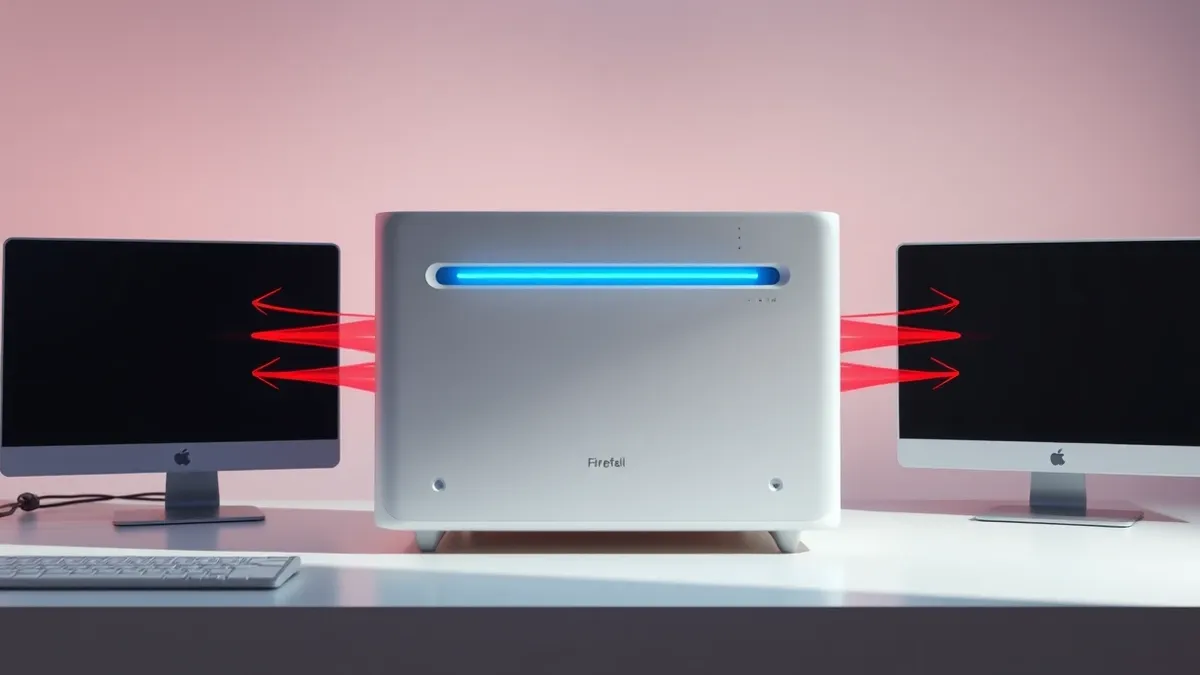
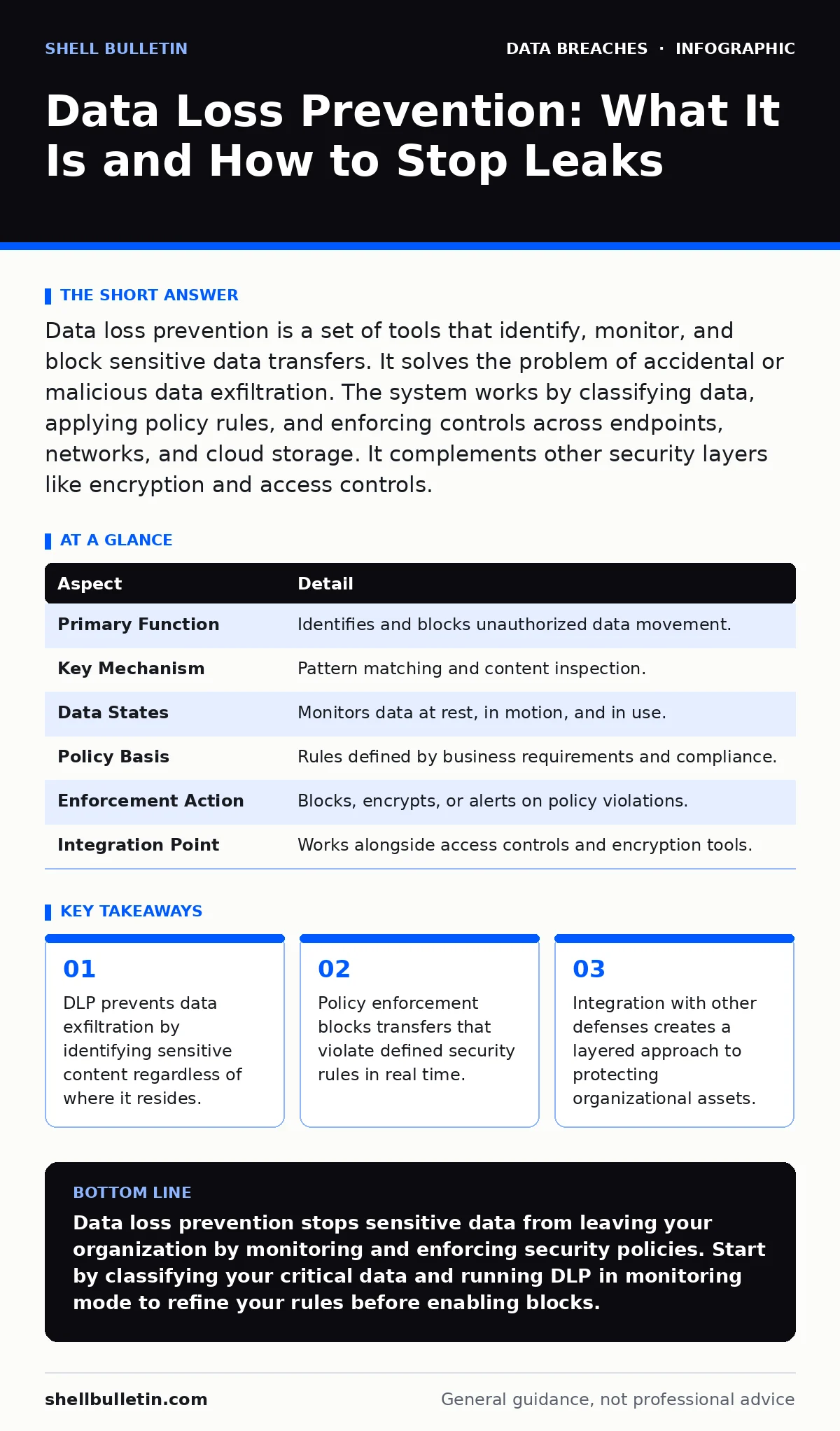
Data loss prevention is a set of tools that identify, monitor, and block sensitive data transfers. It solves the problem of accidental or malicious data exfiltration. The system works by classifying data, applying policy rules, and enforcing controls across endpoints, networks, and cloud storage. It complements other security layers like encryption and access controls.
Understanding the Core Concept of Data Loss Prevention
Data loss prevention refers to a collection of processes and tools that monitor, detect, and block sensitive data transfers. The primary goal is to stop confidential information from leaving the organization without authorization. This includes credit card numbers, intellectual property, and personal customer records. The system acts as a gatekeeper for your digital assets.
It scans files, emails, and network traffic for patterns that match sensitive data definitions. When a match occurs, the system enforces a predefined action. This action might be blocking the transfer, encrypting the content, or alerting an administrator. The mechanism relies on accurate data classification to function effectively. Without clear definitions of what constitutes sensitive data, the system cannot distinguish between safe and risky transfers.
| Aspect | Detail |
|---|---|
| Primary Function | Identifies and blocks unauthorized data movement. |
| Key Mechanism | Pattern matching and content inspection. |
| Data States | Monitors data at rest, in motion, and in use. |
| Policy Basis | Rules defined by business requirements and compliance. |
| Enforcement Action | Blocks, encrypts, or alerts on policy violations. |
| Integration Point | Works alongside access controls and encryption tools. |
The Problem Data Loss Prevention Solves
Organizations face constant pressure to keep information secure while allowing employees to work efficiently. The core problem is that sensitive data can leave the network through many channels. Employees might accidentally send a customer list to the wrong email address. A contractor might copy trade secrets to a personal USB drive. Malware might silently exfiltrate financial records over the internet. Traditional firewalls focus on blocking malicious traffic, not on the content of the data itself.
A firewall allows a legitimate email to pass through even if that email contains a spreadsheet with social security numbers. Data loss prevention fills this gap by inspecting the payload of the communication. It looks inside the file or message to see what it contains. This capability addresses the risk of insider threats and accidental errors. It also helps organizations meet regulatory requirements for protecting personal information.
Main Components of a DLP System
A effective data loss prevention strategy relies on three main components. The first component is data discovery and classification. This process involves scanning storage systems to find sensitive data. It tags files with labels indicating their sensitivity level. The second component is policy definition. Administrators create rules that dictate how different types of data can be handled. For instance, a rule might state that files tagged as "Confidential" cannot be uploaded to public cloud storage.
The third component is enforcement and monitoring. This engine actively watches for data movement and applies the defined policies. It operates across endpoints, networks, and cloud applications. Each component must work together seamlessly. If discovery misses data, policies cannot protect it. If policies are too broad, they block legitimate work. If enforcement is slow, data may leak before detection.
Where DLP Fits in Your Defense Strategy
Data loss prevention is not a standalone solution. It works best as part of a layered security architecture. You need to understand how it interacts with other controls. For example, full disk encryption protects data on a lost laptop, but it does not stop an authorized user from copying that data to a cloud drive. DLP can detect and block that copy action. Similarly, email encryption secures messages in transit, but DLP ensures that only authorized recipients receive sensitive attachments.
DLP complements identity theft protection services by preventing the initial leak of personal data that leads to identity theft. It also supports compliance with standards like PCI DSS by ensuring payment card data is not stored or transmitted insecurely. You should view DLP as the intelligence layer that directs traffic based on content sensitivity. Other tools provide the physical or cryptographic barriers.
Common Misconceptions About Data Loss Prevention
Many organizations misunderstand what data loss prevention can and cannot do. One common mistake is assuming DLP can prevent all data breaches. DLP focuses on data exfiltration, not on initial access. It does not stop a hacker from gaining entry through a phishing link. Another misconception is that DLP is only for large corporations. Small businesses hold valuable customer data and intellectual property. They are equally vulnerable to data leaks, often with fewer resources to recover from a breach. Some believe DLP will slow down productivity significantly.
While poorly configured policies can cause friction, well-tuned rules allow legitimate work to flow freely. The key is to start with monitoring mode before enabling blocking actions. This allows you to refine policies based on actual usage patterns. You must also recognize that DLP cannot protect data once it is in the hands of an authorized user who has no restrictions. Password leaks on external sites can compromise accounts that then bypass DLP controls if the attacker has legitimate credentials.
See also: Fix CIA Triad Misconceptions to Strengthen Your Security Posture · Data Retention Policies: Step-by-Step Implementation Plan
Implementing DLP Without Disrupting Business
Successful implementation requires a careful balance between security and usability. Start by identifying the most critical data assets. Focus on protecting high-value information first. Define clear policies that align with business processes. Involve department heads to understand how data is used in their workflows. This helps avoid creating rules that block essential operations. Begin with a monitoring-only phase. Let the system run for weeks to generate alerts without blocking any actions.
Analyze these alerts to distinguish between true risks and false positives. Adjust your policies based on this data. Gradually introduce blocking actions for the highest risk scenarios. Communicate the changes to employees. Explain why certain actions are blocked and how to request exceptions if needed. Transparency reduces frustration and encourages cooperation. Regularly review and update policies as business needs and threats evolve.
The Role of Data Classification in DLP
Accurate data classification is the foundation of any data loss prevention effort. Without it, the system cannot distinguish between sensitive and non-sensitive information. Classification can be automated using pattern matching and machine learning. It can also be manual, where users tag files with sensitivity labels. A hybrid approach often works best. Automated tools handle large volumes of data, while manual tagging ensures accuracy for complex documents.
You must define what constitutes sensitive data for your organization. This definition should align with legal requirements and business priorities. Regular audits of classified data ensure that labels remain accurate over time. Data that was sensitive last year might no longer be relevant. Conversely, new types of data may emerge that require protection. Keep your classification schemas up to date.
Key takeaways
- DLP prevents data exfiltration by identifying sensitive content regardless of where it resides.
- Policy enforcement blocks transfers that violate defined security rules in real time.
- Integration with other defenses creates a layered approach to protecting organizational assets.
Data loss prevention stops sensitive data from leaving your organization by monitoring and enforcing security policies. Start by classifying your critical data and running DLP in monitoring mode to refine your rules before enabling blocks.
Frequently asked questions
How does DLP differ from antivirus software?
Antivirus software detects and removes malicious code like viruses and ransomware. DLP identifies and blocks the unauthorized movement of sensitive data, regardless of whether malware is involved. One protects system integrity, the other protects data confidentiality.
Can DLP prevent data leaks from cloud applications?
Yes, modern DLP solutions can monitor and control data usage in cloud applications. They inspect files being uploaded to cloud storage and block transfers that violate policy. This extends protection beyond the traditional network perimeter to include SaaS platforms.
Does DLP slow down network performance?
DLP can introduce some latency as it inspects data traffic. However, modern systems are optimized to minimize performance impact. Proper configuration and hardware sizing ensure that security checks do not significantly degrade user experience or network throughput.
How often should DLP policies be reviewed?
DLP policies should be reviewed regularly, at least quarterly. Changes in business processes, regulations, or data types require updates to policy rules. Regular reviews ensure that controls remain effective and aligned with current organizational needs and risk profiles.
How this guide was produced: written by the Shell Bulletin editorial team with AI assistance, checked against the public references listed below, and reviewed when the facts change. See our editorial policy or report an error.